


Amid the pressures of new work styles, high inflation and a tight labor market, organizations face the challenge of rethinking their approach to performance management and pay for performance. Our 2022 Performance Reset Survey suggests that there is much to be gained from embracing this challenge as an opportunity to deliver value in a reconfigured workplace.
While most organizations continue to struggle to be effective at both performance management and pay for performance, roughly one in four (26%) have discovered the path to “high effectiveness” in both these areas (Figure 1).
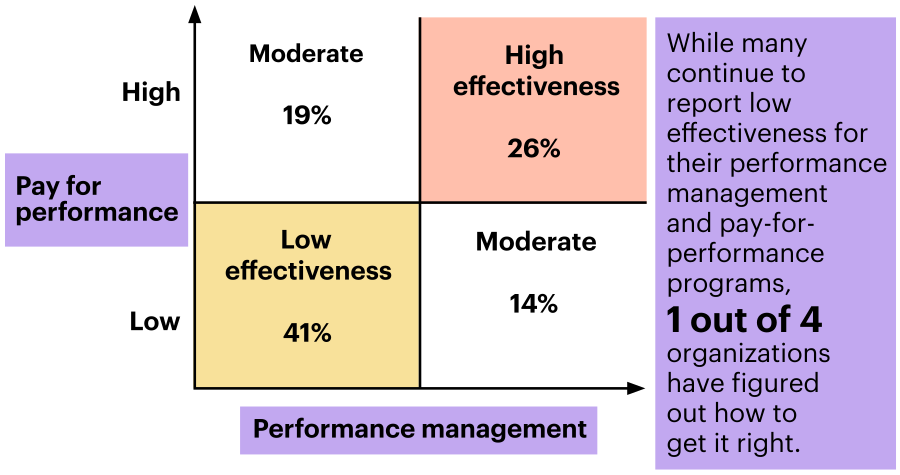
Figure 1. Being effective at both performance management and pay for performance continues to be elusive for most organizations
Moderate (14%) – high performance management and low pay for performance
Moderate (19%) – low performance management and high pay for performance
High effective (26%) – high performance management and high pay for performance
Organizations that succeed in using performance management or pay-for- performance programs effectively to power individual and team performance are more likely to outperform their industry peers financially and to report higher employee productivity.
The benefits of effective performance management and compensation programs
Organizations that are using compensation programs or performance management programs effectively to drive individual and team performance are more likely to outperform their industry peers.
Organizations that are effectively using their performance management:
- 1.48x as likely to report having significantly higher financial performance than their industry peers
- 1.25x as likely to report having higher employee productivity than their industry peers
Organizations that are effectively using base pay, STI and LTI to drive individual and team performance:
- 1.16x as likely to report having significantly higher financial performance than their industry peers
- 1.36x as likely to report having higher employee productivity than their industry peers
Start with a holistic definition of performance
Organizations are broadening their definition of performance beyond the what and the how. Survey respondents indicated that their organizations’ definition of performance emphasized the following: individual performance against goals during a performance cycle (76%), individual performance against job/level expectations (66%) as well as demonstration of values (60%) and competencies (55%), and the impact of an individual’s performance on an organization’s objectives (54%).

Related Content
There are opportunities to broaden the focus even further. Only four in 10 (40%) organizations report that their definition of performance includes an emphasis on team performance or progress against a development plan.
Effective performance management includes a holistic definition of performance that extends beyond individual performance. When compared with those in the low-effectiveness category, high-effectiveness organizations are three times as likely to include the following in their definition of performance:
- Demonstration of skills
- Individual potential
- Progress against development plans
- Team performance
Organizations in the high-effectiveness category also tend to see performance management as having a role in influencing career programs and creating alignment across the organization. For example, these organizations are twice as likely as those in the low-effectiveness category to say performance ratings influence career planning and discussions, development plans and promotions. Additionally, they are one and a half times as likely to say their pay-for-performance approach for non-executives is aligned with their approach for executives.
In addition, effective performance management fosters a better understanding among employees of key performance and compensation issues and promotes a sense of fairness. In contrast to those in the low-effectiveness category, high-effectiveness organizations are twice as likely to say their employees understand their pay-for-performance philosophy.
These organizations are also twice as likely to report that their employees feel that their performance-based compensation is determined fairly and that their performance is evaluated fairly. Only slightly more than one in three organizations (35%) overall indicate their employees feel their performance is evaluated fairly. This is significant because of the prominent role performance management and, in particular, final ratings play in base salary increases and short-term incentive (STI) payouts.
Viewed from this broader perspective, performance management becomes a critical business and people imperative — and not just an HR compliance issue.
Only 40% report that their definition of performance includes an emphasis on team performance or progress against a development plan.
Effective performance management involves the effective delivery of objectives around performance, feedback and career development.
On average, organizations identify about six and a half objectives for their performance management process and deliver on four of these priorities. The number and types of performance objectives were similar across high- and low-effectiveness organizations. But there is a difference when it comes to meeting objectives. Organizations with low effectiveness deliver on 40% of their objectives, while high-effectiveness organizations deliver on 91%.
Organizations can fall short in meeting their objectives for many reasons. Based on our experience, this often occurs when organizations focus on mechanics and compliance issues at the expense of setting appropriate goals and prioritizing quality interactions between managers and employees.
Organizations should strive to set flexible, focused objectives that deliver value to employees, the team and the organization. High-effectiveness organizations are more likely to have removed barriers to delivering on these objectives.
Opportunities to remove barriers to managerial performance
While managers play a critical role in performance management, only roughly half of respondents agree or strongly agree that managers in their organizations are effective at assessing (55%) or differentiating (50%) the performance of their direct reports.
Low-effectiveness organizations are more likely than their peers in the high-effectiveness category to report barriers to managers properly differentiating their direct reports' performance. These barriers arise from the following managerial concerns:
- Explaining differentiation
- Addressing underperforming employees
- Disengaging employees who get ratings below their expectations
- Not having enough time
High-effectiveness organizations are reducing barriers to managerial effectiveness in performance management. In contrast to low-effectiveness organizations, they are more likely to take the following actions in their approach to performance management:
- Equip managers to manage the performance of individuals who use a range of flex work styles (i.e., onsite, hybrid, fully remote) (43% versus 32%)*
- Allow for more flexibility in goal setting and/or discretion in year-end evaluation to account for business volatility (42% versus 30%)*
- Strengthen linkages between performance management and career development (40% versus 21%)*
High-effectiveness organizations are also more likely to emphasize holistic performance check-ins, which may include reviewing progress against goals, discussing barriers to success and linking performance to development opportunities.
Investing in the employee experience
High-effectiveness organizations recognize the importance of engaging employees in the performance management process and fostering a favorable view of the process among employees. Consequently, these organizations are more likely than their peers in the low-effectiveness category to invest in employee learning and development programs, manager capability building, and communication and branding efforts in order to build a positive employee experience around performance management (Figure 2).
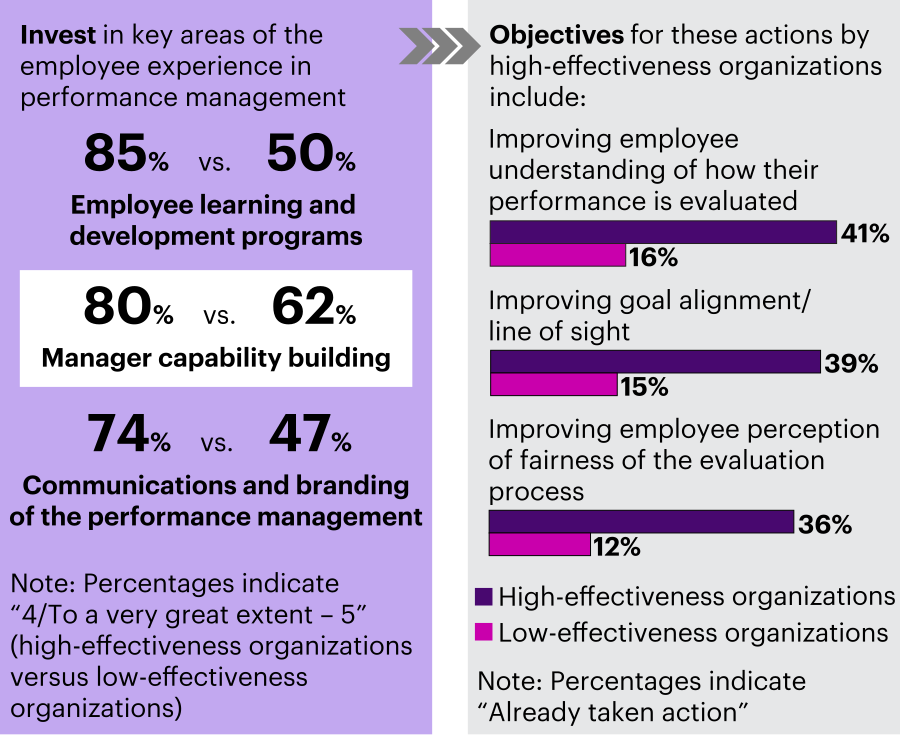
Figure 2. High-effectiveness organizations are more likely to invest in the employee experience
Employee learning and development programs
Manager capability building
Communications and branding of the performance management
Note: Percentages indicate “4/To a very great extent – 5” (high-effectiveness organizations versus low-effectiveness organizations)
Objectives for these actions by high-effectiveness organizations include:
Improving employee understanding of how their performance is evaluated: 41% high-effectiveness organizations, 16% low-effectiveness organizations.
Improving goal alignment/line of sight: 39% high-effectiveness organizations, 15% low-effectiveness organizations.
Improving employee perception of fairness of the evaluation process: 36% high-effectiveness organizations, 12% low-effectiveness organizations.
Note: Percentages indicate “Already taken action”
This experience will help boost employees’ understanding of how their performance is evaluated and improve their perception of fairness of the evaluation process.
Understanding what it takes to effectively pay for performance
An effective pay-for-performance program draws on all components of compensation — base pay, STIs and LTIs — to power individual and team performance.
Respondents in the high-effectiveness category were more likely than low-effectiveness organizations to report that base pay increases should emphasize rewarding top performers in critical roles (Figure 4).
High-effectiveness organizations were also more likely to indicate that the final rating along with the possession of skills critical to the success of the future business model drive both STIs and LTIs; however, market competitiveness is also a key factor in determining STI payouts.
Respondents indicated that they are planning or considering making changes to improve the effectiveness of their pay-for-performance programs in the following areas:
- Pay-for-performance philosophy
- Changing their pay-for-performance philosophy: 39%
- New technology
- Enabling the process with new technology: 44%
- Increased managerial discretion and flexibility
- Introducing more managerial discretion: 29%
- Allowing more flexibility in translating performance outcomes into payouts: 41%
- Improved differentiation
- Increasing upside earnings opportunities for high performers: 48%
Given that pay is often a top driver of attraction and retention, these changes should help organizations hire and retain talent essential to their future success.
Key actions to improve the effectiveness of your performance management and pay-for-performance programs
- Reframe performance management as a key business and people process as opposed to an HR compliance exercise.
- Define the top three to four objectives of your organization’s performance management process and ensure the performance definition and measures of program success align with the intent of the program.
- Shape a differentiated performance experience. Review the role of the manager, employee and HR in performance management. Commit to a fundamental behavior change and set expectations to shape a differentiated performance experience.
- Emphasize career development, continuous feedback and wellbeing checks. Prioritize meaningful interactions and outcomes over program mechanics.
- Align your pay-for-performance approach with objectives. Strive to align your pay-for- performance philosophy and design with the overall objectives of the performance management process.
About the survey
A total of 837 organizations globally participated in the 2022 Performance Reset Survey, which was conducted mid-September to early November. Respondents employ 7.3 million employees.
- Domestic 47%
- International 22%
- Global 31%
Download
| Title | File Type | File Size |
|---|---|---|
| Reshaping performance management and pay for performance in a challenging environmentPDF | 1.4MB |
High-effectiveness organizations report they are effectively delivering on 91% of objectives for their performance management process.